New pets
New puppy checklist: ID, records and the first vet visits
Bringing a puppy home? Everything to sort in the first weeks: microchip transfer, ID tags, vaccinations, vet registration, insurance and keeping records together.

Key points
- Your puppy should already be microchipped. Transfer the registration into your name.
- Fit a collar with an engraved ID tag before their first walk in public.
- Register with a vet and keep their vaccination record safe.
- Start building their health record now: it helps with insurance later.
Before you collect your puppy
- Ask the breeder or rescue about the microchip. In England, Scotland and Wales, puppies must be microchipped by eight weeks old, before they go to their new home. Get the chip number and the database it's registered on.
- Find a vet and register your puppy.
- Think about insurance. Many policies won't cover conditions that showed signs before the policy started, so it's worth arranging early.
The first week
- Transfer the microchip registration into your name. It's your legal responsibility to keep the details current.
- Fit a lightweight collar and let your puppy get used to it at home.
- Get an engraved ID tag with your name and address (and a mobile number). It's a legal requirement for dogs in public.
- Set up their Riley profile. Add their date of birth, breed, microchip number and vaccination record, and give them their own inbox address for vet emails.
Vaccinations and first vet visits
Your vet will advise on a vaccination schedule, worming and flea treatment. Keep every record in Riley, so you can show them to puppy classes, groomers, kennels and future insurers.
Before the first walk
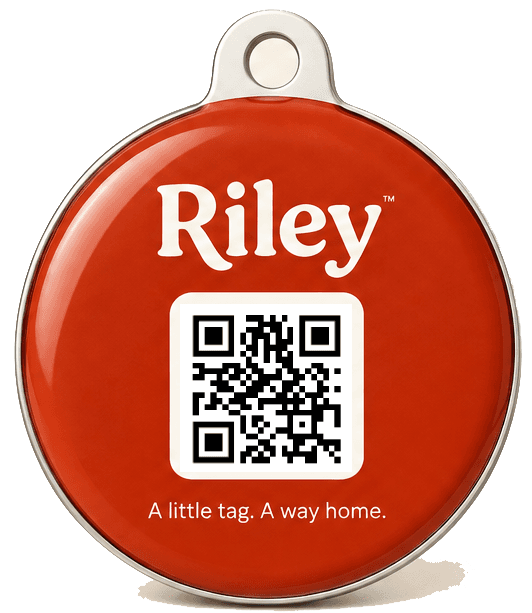
- Collar, engraved tag, and a Riley Tag with a care note like "Young puppy, still learning recall".
- A well-fitted harness and lead.
- Practise recall at home and in the garden first.
Keep checking
Puppies grow fast. Check their collar fit every week or two: you should be able to slide two fingers underneath.
This guide is general information for UK pet owners and isn’t legal or veterinary advice. Laws differ across the UK nations and can change. For medical concerns, contact your vet.