ID & the law
Microchipping dogs and cats in the UK: the complete guide
When dogs and cats must be microchipped in the UK, how to keep your details up to date, what a microchip can and can't do, and why visible ID still matters.

- Dogs in England, Scotland and Wales must be microchipped by eight weeks old.
- Cats in England must be microchipped by 20 weeks old (since 10 June 2024).
- You must keep your contact details up to date on the microchip database.
- A microchip isn't a tracker; it can only be read with a scanner.
The rules for dogs
Microchipping has been compulsory for dogs in England, Scotland and Wales since 2016. Puppies must be microchipped by the time they're eight weeks old, and the chip must be registered on a government-compliant database. Breeders are responsible for chipping puppies before they go to their new homes, and new owners must then update the registration into their own name.
In Northern Ireland, dogs must be microchipped as a condition of getting a dog licence.
The rules for cats
Since 10 June 2024, cats in England must be microchipped by the time they're 20 weeks old and registered on a compliant database. As with dogs, owners must keep their contact details up to date.
Keeping your details up to date
This is the part people forget. A microchip is only as useful as the details behind it. Update your database record when you:
- Move house
- Change your phone number or email
- Rehome a pet, or adopt one
If you're not sure which database your pet's chip is registered with, your vet can scan the chip and there are free online lookups that tell you which database holds that number.
Penalties
If a dog or cat isn't microchipped, the owner can be served a notice and given 21 days to get it done. Failing to comply can lead to a fine of up to £500.
What a microchip can't do
A microchip is a tiny implant with a unique number. It has no battery and can't track your pet's location. It can only be read by a scanner, held by vets, councils and rescues. So a microchip helps once a finder has caught your pet and taken them somewhere with a scanner, which might be hours or days later.
Visible ID matters too
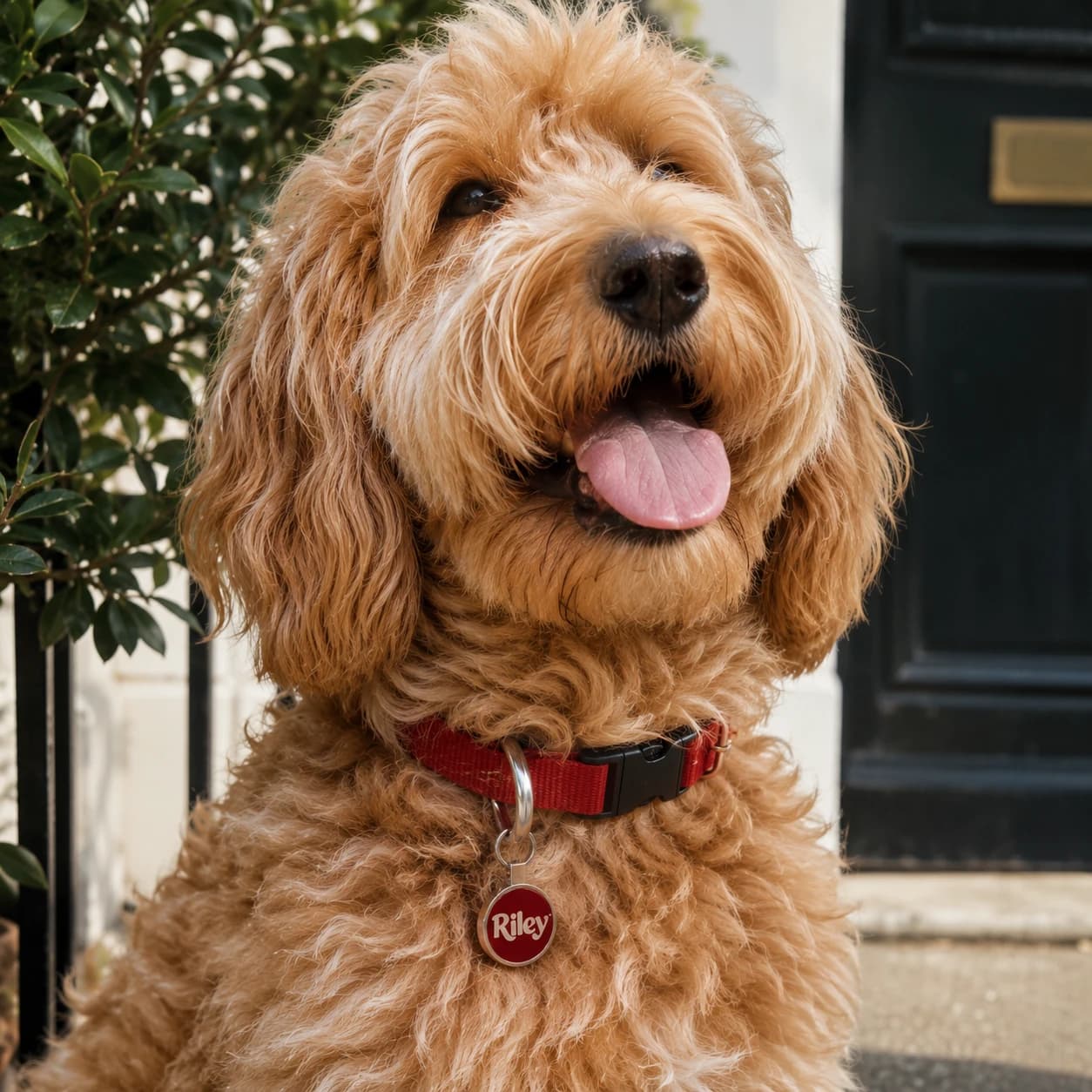
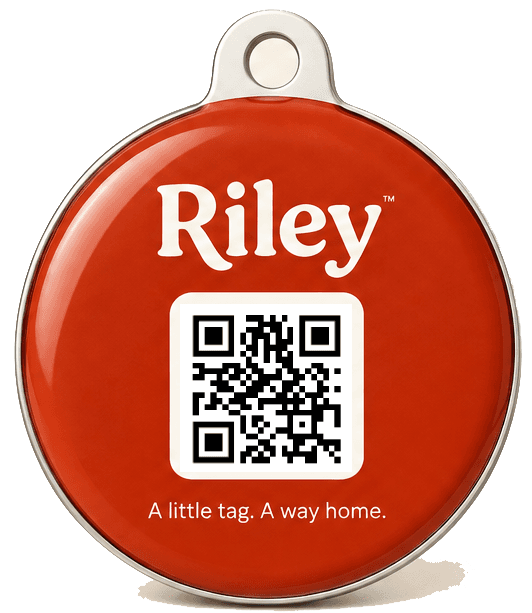
That's why dogs must also wear a collar tag with your name and address in public, and why a visible tag helps cats too. A Riley Tag lets anyone with a phone message you on the spot, with care notes and lost mode. Use it alongside the microchip, never instead. Compare a microchip and Riley Tag.
Frequently asked questions
Does microchipping hurt?
It's a quick injection under the skin, similar to a vaccination. Most pets barely notice. Your vet can advise.
Can I track my pet with a microchip?
No. A microchip has no GPS or battery. It holds a number that a scanner can read.
This guide is general information for UK pet owners and isn’t legal or veterinary advice. Laws differ across the UK nations and can change. For medical concerns, contact your vet.